

BYU has thrived in an NIL era that many expected them to falter in, NFL legend Steve Young says

"How is BYU gonna do this, right? How in the world?"
That was the question NFL legend and BYU great Steve Young had when name, image and likeness (NIL) compensation transformed college football in 2021.
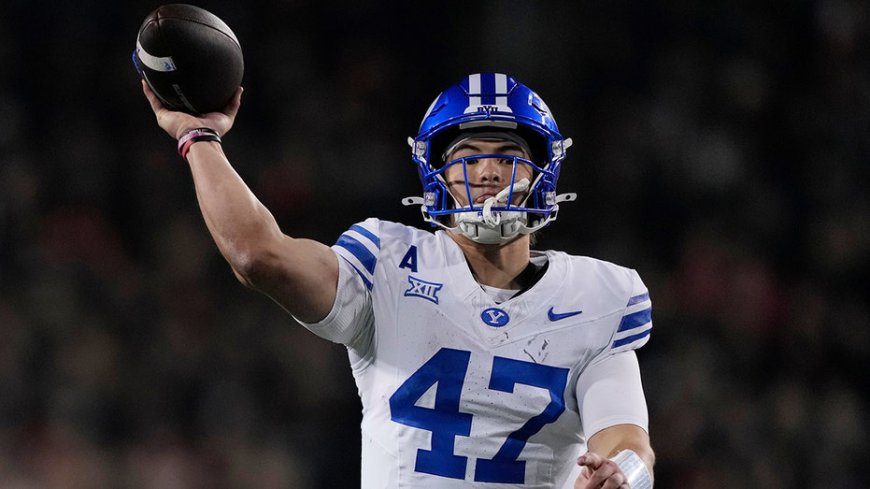
Instead? It’s been the opposite. Since 2021, BYU is tied with Boise State for the ninth-most wins in college football. The Cougars are currently No. 7 in the AP poll and reached No. 2 after beating Notre Dame. With a win over No. 3 Utah in the Holy War on Saturday, BYU has an opportunity to once again reach the top of the polls.
CLICK HERE FOR MORE OUTKICK SPORTS COVERAGE
NIL didn’t shut BYU out but instead gave the school an opportunity to get into the recruiting game.
"I'm not throwing anyone under the bus," BYU Vice President of Advancement Keith Vorkink told OutKick. "But there's rumored payment of players long before NIL. We're a university that does our best to adhere to whatever the policies are at the time. We're grateful for the avenue that opened up for us to participate in that space and do so in compliance."
But how does BYU, a private university sponsored by The Church of Jesus Christ of Latter-day Saints in Provo, Utah, assimilate into the NIL world without losing the institution's core values?
Simply, the school doesn't stray from the culture that makes BYU what it is.
"Our work was to figure out our play in the NIL space, but in doing so to never displace the primary role of our mission. Our football coach, as an example, Kalani Satake embraces the distinctive role of the university and the athletic department. We want student athletes coming because of, for example, in football, the culture that Kalani brings to that that aligns to the university and the church," Vorkink said.
THE CRAIG CARTON SHOW–UNFILTERED, UNAPOLOGETIC AND UNMISSABLE. DOWNLOAD HIS DAILY PODCAST NOW!
Vorkink said BYU doesn’t want to lead the NIL market. The school wants students to come for the culture, not primarily for the money. Young praised Sitake for building such a strong culture despite college football being littered with players who want to play for top dollar and nothing more.
"It's hard to build affinity," Young told OutKick in a recent interview. "And that's why I say what Kalani's done is what is, I think, impossible, nearly, I think he is doing it, so it's not impossible. He's doing it in a really complex environment that works away from affinity, works away from spirit of abundance."
"Right now, it's a zero-sum game, right? It's, I'm a mercenary and just pay me. And, and he's built something. He's like, oh, no, we recognize you need to be paid. We recognize that this is part of the system, but can we put that aside, take care of that, and now build something that is unified."
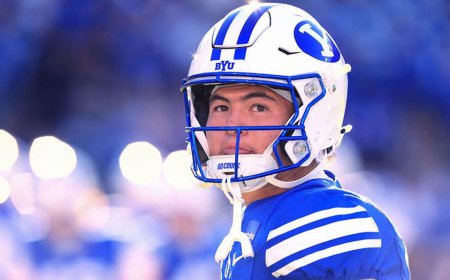
The culture at BYU has resonated with some of its star players. Vorkink said five-star freshman small forward Bruce Branch and star quarterback Bear Bachmeier could have left for more money but chose to stay.
Vorkink said NIL and the ability to compensate players have allowed the school to recruit athletes it might not have been able to recruit before, including students who aren't members of the faith but find their way to campus and thrive.
He mentioned 2026 NBA Draft No. 1 overall pick AJ Dybantsa as an example of a player who came to love the university despite initially knowing little about it.
"AJ didn't know much about BYU. A lot of that was because (head coach) Kevin Young came from the NBA and he wondered, could Kevin help him prepare to play in the NBA. That got him here. There were other schools who are offering him more compensation than he received here, which is consistent with our philosophy. But he thrived," Vorkink said.
"He spoke publicly about his love for BYU and how much he enjoyed being here. That helped gets the word out to other people who are like, well, is BYU too weird or not? Can I thrive? And we believe that student athletes, if they understand the mission, accommodate or embrace it, they can have a good experience here."
At BYU, all students must sign an honor code requiring them to abstain from alcohol, tobacco, coffee, tea, vaping, marijuana and other prohibited substances, as well as sexual relations outside of marriage between a man and a woman. Young said the uniqueness and counterintuitive nature of the honor code can actually be a draw in recruiting.
"It's counterintuitive in a way, but because you lead with the honor code, you lead with the uniqueness of BYU. By definition, the conversation is different than any other, like a lot of the conversations. And so, when you lead with it, but you lead with it with an openness and an invitation, and you can be your whole self. You don't have to conform," Young said.
"There's certain behaviors that we're going to ask from you, but as far as who you are, you can express that, and you can be, you can feel, and I think that there's a lot of players, non-LDS players on the team, and that's true when I played, that felt like this is awesome being here."
Young gives much of the credit to Sitake for maintaining the school's identity despite NIL and the money that comes with it threatening to tear it apart.
"There's big money involved. Money is, we all know money is dangerous, man. There's fits and starts to it too, trying to figure it out. It is the wild west, and it's not simple," Young said.
"Why I give Kalani so much credit in, in kind of holding up, like taking the spirit of what was, has always been here. And then applying it to these, and I guess in some ways, that's the magic, is that with an infrastructure of what I call the law of love, where like, we see you. We want all of you, like the whole self, and we want you to feel welcomed and, and here's the rules of the road."
"We think it's good for you. We don't think it's bad. We don't think it's restrictive. We think it's actually expansive in ways that maybe be counterintuitive, but it's awesome."
ZERO BS. JUST DAKICH. TAKE THE DON'T @ ME PODCAST ON THE ROAD. DOWNLOAD NOW!
While BYU has found a way to thrive in the NIL era without compromising its values, both Young and Vorkink believe the system needs regulation to provide greater stability.
"I think every university would want more stability, more of a solid framework around the compensation of student-athletes," Vorkink said. "I think we all realize the value that they bring economically to the athletic department and the university and they should be able to participate in it. But legislative solutions like protecting college sports, it's not perfect, but it really goes a long way in providing stability, and some governance in this world that we're supportive of."
Young, like Vorkink, believes student-athletes should be paid as well. The former San Francisco 49ers star said he heard rumors that schools were considering hiring student-athletes as employees and even having them attend classes.
He said Congress is the only entity that can balance the competing interests of student-athletes getting paid and graduating while not restricting their ability to transfer between schools in a free market.
"Congress is the only one that can put that back together. I hope that all those competing interests can find a place where the players aren't the ones that lose. Cause I think that was what started the whole problem before is so much money was coming into the system, and the guys playing the game were, were making $50 in stipend." Young said.
Regardless of what comes next, Young said BYU has hit on NIL and done it their way.
"Hold on, you're supposed to be flailing in this system, and I think we've hit on it. We've looked it in the eye, right?" Young said.
"We'll compete, but we're going to compete in (what) I call it the BYU way."
What's Your Reaction?
 Like
0
 Dislike
0
 Love
0
 Funny
0
 Angry
0
 Sad
0
 Wow
0