




New big rig safety tech could save your life

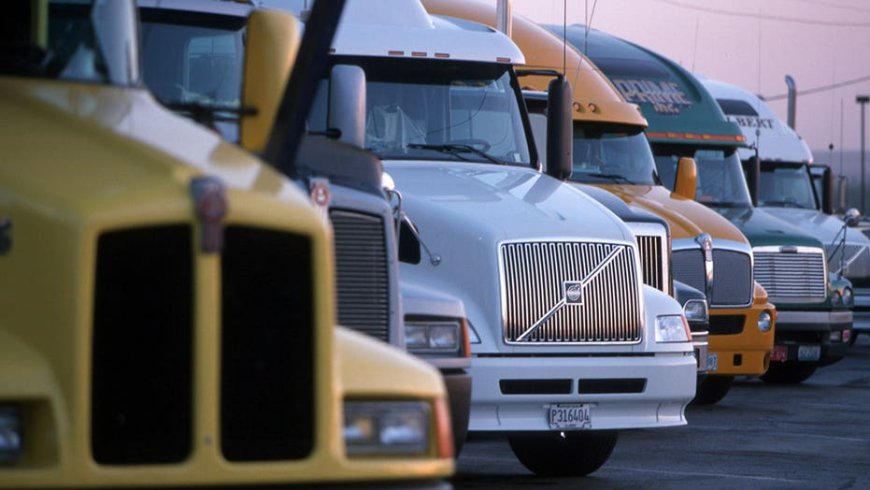
Ever find yourself driving next to a massive 18-wheeler and wondering if the driver can actually see your car? It's a reasonable concern. Big rigs have enormous blind spots, and stopping one takes a lot more time and distance than stopping your car. Now, new big rig safety tech from Daimler Truck could help prevent some of the most dangerous crashes on our roads.
The company behind Freightliner is upgrading its trucks with technology that can recognize potential collisions and automatically hit the brakes. We're talking about situations where another driver suddenly cuts across a truck's path or a pedestrian gets dangerously close during a turn. And demonstrations at Daimler's Oregon proving grounds offer a revealing look at what happens when this technology faces situations that could turn deadly on public roads.
Missed CyberGuy LIVE? Watch the replay and discover 5 ways to travel smarter and save money.
Our free CyberGuy LIVE class, 5 Ways to Travel Smarter and Save Money, has ended, but you can still watch the full replay. Kurt "CyberGuy" Knutsson walks you through five practical ways to protect your phone and personal information, avoid common travel scams, find better deals, save money on bookings and use technology to make your travels easier and less stressful. No technical experience is needed.
Watch the free replay + downloadable checklist now at CyberGuyLive.com.
100 KODIAK DRIVERLESS TRUCKS ARE HEADED FOR PUBLIC ROADS
At Daimler Truck's testing facility in Oregon, engineers recreated situations that could easily turn deadly on a public road. They used dummy cars mounted on remote-controlled platforms to simulate vehicles suddenly crossing in front of a moving Freightliner Cascadia. In one demonstration, the truck successfully avoided a collision. In another, it clipped the dummy car after braking. That second test may sound like a failure, but consider what could have happened if the truck had continued at full speed. Slowing down before impact can make an enormous difference when a passenger car comes face-to-face with a fully loaded truck.
The demonstrations generally took place at speeds between 40 and 55 mph. Daimler said the truck's trailer carried approximately 30,000 pounds during the tests. That's a lot of weight pushing forward when the brakes suddenly engage. And here's what caught my attention. The technology was designed to recognize these developing dangers and respond even when the driver had little time to react. That's especially important because a few seconds can determine how serious a collision becomes.
The technology comes from Detroit Assurance, Daimler Truck North America's collection of advanced driver assistance systems. At the center is Active Brake Assist 6, also known as ABA6. It uses five radar sensors and a camera to monitor what's happening around the truck. Together, they provide approximately 270 degrees of coverage, including areas alongside a standard 53-foot trailer.
Think of it as another set of electronic eyes helping the driver keep track of nearby traffic. The system can identify certain vehicles that have stopped unexpectedly, including cars sitting at unusual angles after an accident. For example, a truck approaching a crash scene might encounter a disabled vehicle partly blocking the roadway. Active Brake Assist 6 is designed to recognize these situations and warn the driver. If necessary, it can also apply the brakes.
The technology can recognize pedestrians and cyclists in certain scenarios, too. That's particularly useful when a large truck travels through busy areas where people may be difficult to see from the cab. And Daimler is now expanding those capabilities to address another dangerous situation.
WHAT HAPPENS IF THE WAYMO COMPUTER FAILS?
Intersections can be especially challenging for truck drivers. They have to maneuver a massive vehicle while watching traffic that may approach from several directions. All it takes is one person making an unexpected move. That's where a new feature called Cross Traffic Assist comes in. The system uses radar to detect vehicles crossing the truck's path at intersections. If it recognizes a potential collision, it can alert the driver with audible and visual warnings. When the danger becomes more serious, it can also apply partial or full braking. Now, think about what that could mean if someone accidentally pulls out in front of an approaching truck. The system may give the driver extra time to respond or help reduce the force of a collision.
Another improvement involves Active Side Guard Assist 2. The enhanced system adds protection when the truck makes a left turn across oncoming traffic. With the left turn signal activated, it can recognize certain approaching vehicles and warn the driver. If necessary, it can also apply the brakes. The new left-turn protection builds on existing safety technology that monitors the passenger-side blind spot during right turns. That system can detect pedestrians and cyclists and apply braking when necessary.
These improvements are scheduled to become standard on Freightliner Cascadias built beginning in 2027, with production planned for January. Active Brake Assist 6 itself is already standard on the fifth-generation Cascadia. According to Daimler Truck North America, the goal is to give professional drivers additional support when visibility or reaction time becomes limited.
There's another feature that deserves attention because it addresses a frightening possibility. What happens if someone behind the wheel of a big rig suddenly becomes unresponsive? Freightliner's optional Active Lane Assist 2 can help keep the truck centered in its lane and correct unintended drifting. It can also provide steering assistance during certain challenging driving conditions, such as strong crosswinds.
But the feature I find particularly interesting is called Attentive Driver Protection. When the lane-keeping system is active, Attentive Driver Protection monitors whether the driver continues responding. If the driver fails to respond to escalating warnings, the technology can slow the truck to a stop while helping keep it centered in its lane. It can also activate the hazard lights to warn surrounding traffic.
Consider the potential consequences of a driver becoming unresponsive while operating a massive truck on a busy highway. Having an additional safety system that can help bring the vehicle to a controlled stop could make a significant difference. However, the feature doesn't diagnose medical emergencies or determine why a driver has stopped responding. It reacts to a lack of driver response under specific conditions. And like the other safety systems, it still depends on factors such as road conditions and sensor performance.
HUMANLESS BIG RIG COMPLETES FIRST US FREIGHT RUN
You may never drive a Freightliner, but chances are you share the road with big rigs regularly. And that's why these improvements should interest you. If a truck can recognize a dangerous situation and begin braking before the driver has time to react, the people in nearby vehicles could have a better chance of avoiding serious injuries. Even reducing the speed of an unavoidable collision could make a significant difference.
But don't assume every truck you encounter has these features. Many older trucks won't have the newest technology, and even equipped vehicles have limitations. Sensors can struggle in poor weather or when visibility becomes limited. Automatic braking also cannot guarantee that every collision will be avoided.
So, continue giving big rigs plenty of room. Avoid lingering beside a truck where the driver might have trouble seeing you. And when passing, make sure there's sufficient space before moving back into its lane. Remember that even the smartest technology cannot change the physics of a massive truck traveling at highway speed. The safest approach is to stay alert and avoid putting yourself in a situation where a truck driver has to make a sudden move.
Here's what I find encouraging about Daimler's latest safety technology. It recognizes something we all know about driving. People make mistakes. Someone misjudges an intersection or pulls out without realizing how quickly a truck is approaching. Those split-second decisions can have terrible consequences, especially when a massive vehicle has little room to stop. The demonstrations in Oregon showed why this technology has potential. In one scenario, the truck avoided a collision. In another, contact still occurred, but the braking reduced the impact. That second result is an important reminder that a safety system can still provide protection even when it cannot prevent every accident. I also think we're seeing an interesting shift in how truck manufacturers approach safety. There's been plenty of attention on trucks that can drive themselves. Yet here we have technology designed to help professional drivers do their jobs more safely. And when you consider how many trucks share our highways, even modest improvements in collision prevention could have an enormous impact. Of course, controlled demonstrations are one thing. Everyday traffic brings unexpected challenges that are much harder to predict. I'll be interested to see how these systems perform as more equipped trucks reach the road. If the technology can prevent serious crashes, that's something we can all appreciate.
Would you feel safer knowing an 18-wheeler could automatically brake to avoid hitting your car, or would you still be nervous driving alongside a massive truck that relies on software to react? Let us know by writing to us at CyberGuy.com.
Sign up for my FREE CyberGuy Newsletter
Copyright 2026 CyberGuy.com. All rights reserved.
What's Your Reaction?
 Like
0
 Dislike
0
 Love
0
 Funny
0
 Angry
0
 Sad
0
 Wow
0